
Data Maturity Assessment: Is Your Organisation Ready for AI and Advanced Analytics?
Use five maturity levels to assess whether your data, controls and ways of working can support advanced analytics and AI.
Use this insight to
Identify what evidence would help explain the problem and who needs to respond.
A data maturity assessment tests whether an organisation can reliably collect, govern, access and use data well enough to support better decisions, advanced analytics and AI.
The purpose is not to award a maturity badge.
It is to identify the specific capabilities that are strong enough today, the weaknesses blocking priority use cases, and the sequence in which those weaknesses should be addressed.
Why data maturity matters for AI
AI exposes data problems quickly.
A dashboard can sometimes tolerate inconsistent definitions because an analyst explains the caveat. An automated decision or retrieval system can repeat the inconsistency at scale.
Common blockers include:
- customer identifiers that do not match across systems;
- documents with weak metadata;
- incomplete event tracking;
- important fields entered inconsistently;
- unclear data ownership;
- access that depends on one person exporting a spreadsheet;
- stale data feeding operational decisions;
- no shared definition for core measures.
This is why “we have lots of data” and “we are ready for AI” are not equivalent statements.
The five levels of data maturity
Abrasim uses a five-level model:
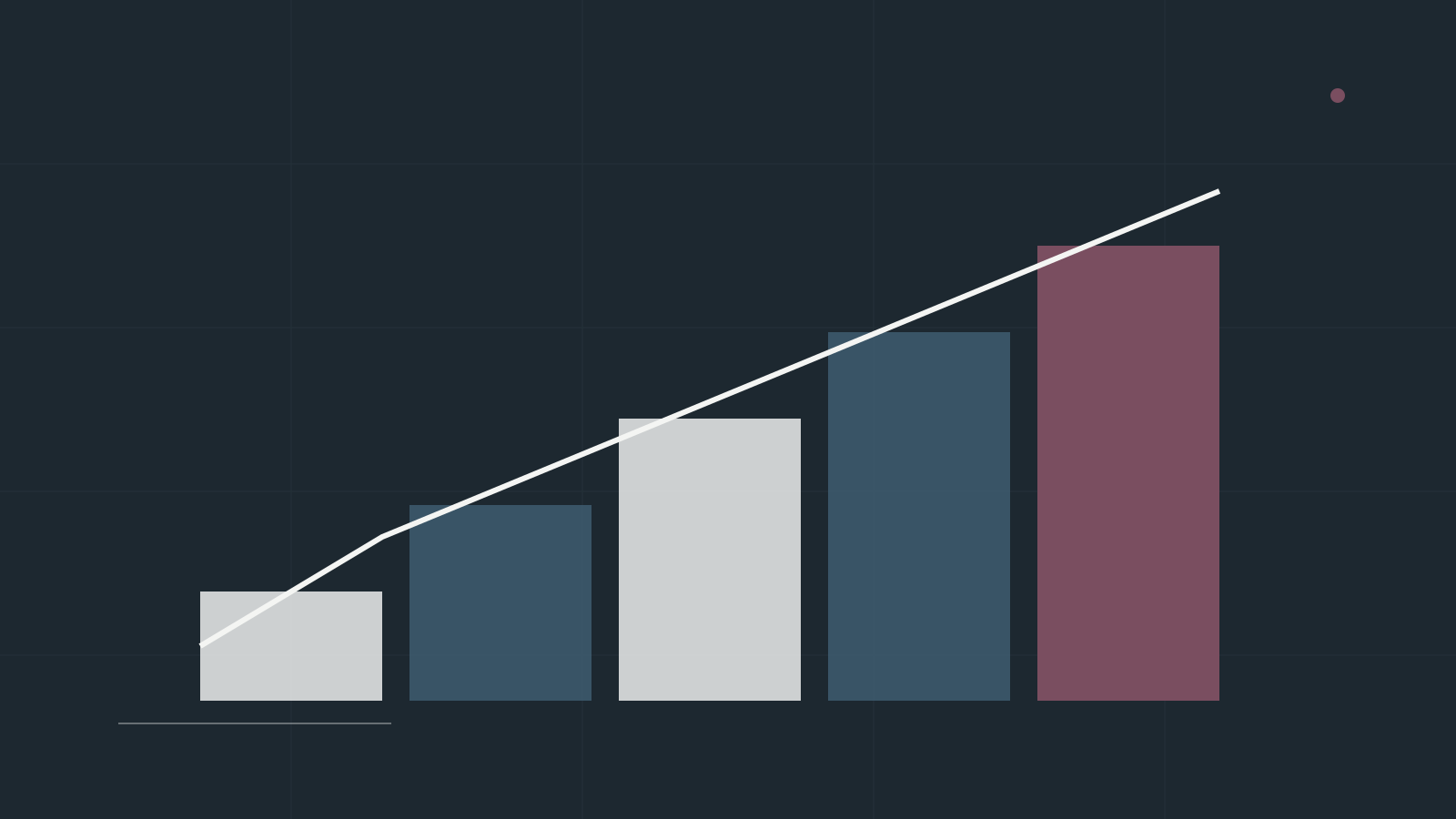
Fragmented → Repeatable → Governed → Integrated → Decision-led
The levels should be assessed across several dimensions rather than applying one score to the whole organisation.
Level 1: Fragmented
Data exists, but use is inconsistent and highly manual.
Typical signs:
- spreadsheets are the main integration layer;
- teams maintain their own definitions;
- reporting depends on manual exports;
- ownership is unclear;
- quality issues are discovered after reports are produced;
- access depends heavily on individuals.
At this level, the first priority is usually not advanced AI.
The priority is identifying critical decisions and stabilising the minimum data needed to support them.
Level 2: Repeatable
Some reporting and data processes are standardised, but they remain dependent on local practices.
Typical signs:
- common dashboards exist;
- major source systems are known;
- recurring reports follow templates;
- some data-quality checks exist;
- basic tracking standards are documented.
The organisation can begin selected analytics and AI experiments, but scale is likely to expose inconsistencies.
Level 3: Governed
Important data has clear ownership, definitions and controls.
Typical signs:
- critical metrics have agreed definitions;
- owners or stewards are assigned;
- access follows defined rules;
- important data-quality issues are monitored;
- privacy and retention expectations are clearer;
- teams know where trusted data should come from.
Governance does not mean bureaucracy everywhere.
It means the organisation knows which data matters enough to manage deliberately.
Level 4: Integrated
Trusted data flows between systems and is increasingly reusable.
Typical signs:
- common identifiers connect major datasets;
- integrations reduce manual exports;
- approved data products are reusable;
- lineage is clearer;
- analytics teams spend less time reconciling sources;
- operational systems can consume data programmatically.
This is where AI and automation opportunities become much easier to scale because each new use case does not require rebuilding the same data foundations.
Level 5: Decision-led
Data is embedded in operating decisions and improvement loops.
Typical signs:
- decisions have defined measures;
- experiments are routinely evaluated;
- alerts and recommendations enter workflows;
- analytics influences resource allocation;
- AI systems have monitored data inputs;
- leaders distinguish activity metrics from outcome metrics;
- value realisation is measured after implementation.
The goal is not maturity for its own sake.
The goal is better performance.
Assess maturity across six dimensions
A single enterprise score hides too much.
Assess at least these areas.
1. Business alignment
Are data initiatives linked to strategic questions and measurable outcomes?
2. Data quality
Are priority datasets complete, accurate, timely and consistently defined enough for their intended use?
3. Governance
Are ownership, access, privacy, retention and issue-resolution responsibilities clear?
4. Architecture and integration
Can data move reliably between the systems that need it?
5. Analytics and decision use
Does reporting change decisions, or mainly describe what happened?
6. People and capability
Do teams have the skills, operating habits and leadership support to use data productively?
An organisation may be Level 4 in architecture and Level 2 in decision use.
That distinction is strategically useful.
Data maturity should be assessed against use cases
Suppose a retailer wants an AI-assisted product recommendation capability.
The relevant data questions are specific:
- Are product identifiers consistent?
- Is transaction history available?
- Can customer activity be connected lawfully and accurately?
- Is inventory information current enough?
- Can recommendation outputs reach the commerce platform?
The organisation does not need every HR spreadsheet to reach Level 5 first.
Readiness is contextual.
This is why a good assessment connects maturity gaps to the use cases leadership actually cares about.
The link between data governance and value
Governance is sometimes positioned as the opposite of innovation.
That is a mistake.
Clear ownership and definitions can increase speed because teams spend less time debating which number is correct or requesting access from the wrong person.
OECD work on data governance emphasises the balance between enabling data use and maintaining trust, rights and appropriate control.
In a commercial organisation, effective governance should make responsible reuse easier.
Questions a data maturity assessment should answer
Leadership should leave the assessment knowing:
- Which decisions suffer most from weak data?
- Which datasets are genuinely critical?
- Where are the largest quality risks?
- Which definitions cause repeated disagreement?
- Which manual processes should be removed?
- Which integrations would unlock multiple use cases?
- Which governance gaps create risk?
- Which AI ambitions are ready now?
- Which require data work first?
- What should be addressed over the next 90 days, 6 months and 12 months?
That is much more useful than “your maturity score is 2.8”.
What evidence should be reviewed?
A robust assessment may examine:
- data-source inventory;
- business definitions;
- dashboards;
- analytics implementation;
- data pipelines;
- CRM and finance structures;
- data-quality incidents;
- access processes;
- governance policies;
- architecture diagrams;
- data retention and privacy controls;
- employee interviews;
- priority AI and analytics use cases.
The objective is to compare policy, architecture and day-to-day reality.
Common maturity traps
“We have a data warehouse, therefore we are mature”
A warehouse can centralise data without resolving inconsistent definitions, poor source quality or weak decision use.
“Our dashboards are automated”
Automation improves reporting efficiency, but maturity depends on whether the measures are trusted and used.
“AI will clean the data”
AI can assist with some classification and quality tasks. It does not remove the need for ownership and clear definitions.
“We need a single source of truth for everything”
The phrase is useful, but organisations often need multiple authoritative domain sources connected by consistent definitions and governance rather than one enormous physical database.
From assessment to roadmap
Findings should be prioritised by value and dependency.
A practical roadmap might include:
Now
- define critical business metrics;
- repair high-impact tracking gaps;
- assign owners to priority datasets;
- fix one painful manual integration.
Next
- standardise identifiers;
- establish reusable data products;
- strengthen quality monitoring;
- improve controlled access.
Scale
- embed analytics into workflows;
- enable governed AI access;
- automate selected decisions;
- measure value continuously.
The sequence should follow business value, not maturity-model aesthetics.
When should you run a data maturity assessment?
It is particularly useful when:
- AI investment is being planned;
- reporting is widely distrusted;
- teams spend excessive time reconciling numbers;
- a new data platform is being considered;
- multiple systems need to be integrated;
- leadership wants to move from dashboards to predictive or decision intelligence;
- data governance exists on paper but not operationally.
If the problem is narrower and focused mainly on analytics implementation or measurement accuracy, a Data & Measurement Audit may be the better entry point.
The maturity outcome that matters
The most mature organisation is not the one with the largest data stack.
It is the one that can repeatedly turn trusted data into better decisions while managing risk appropriately.
That is the standard AI and advanced analytics ultimately depend on.