
What Is a Data Strategy and Why Does Your Business Need One?
Build a data strategy around the decisions your business needs to make, with clear responsibilities, reliable data and appropriate access.
Use this insight to
Check whether this describes a problem in your organisation that needs attention.
A data strategy is a plan for turning data into better decisions and business outcomes.
That sounds obvious, yet many “data strategies” begin with platforms, warehouses and dashboards rather than the decisions the organisation needs to improve.
A useful data strategy connects five things:
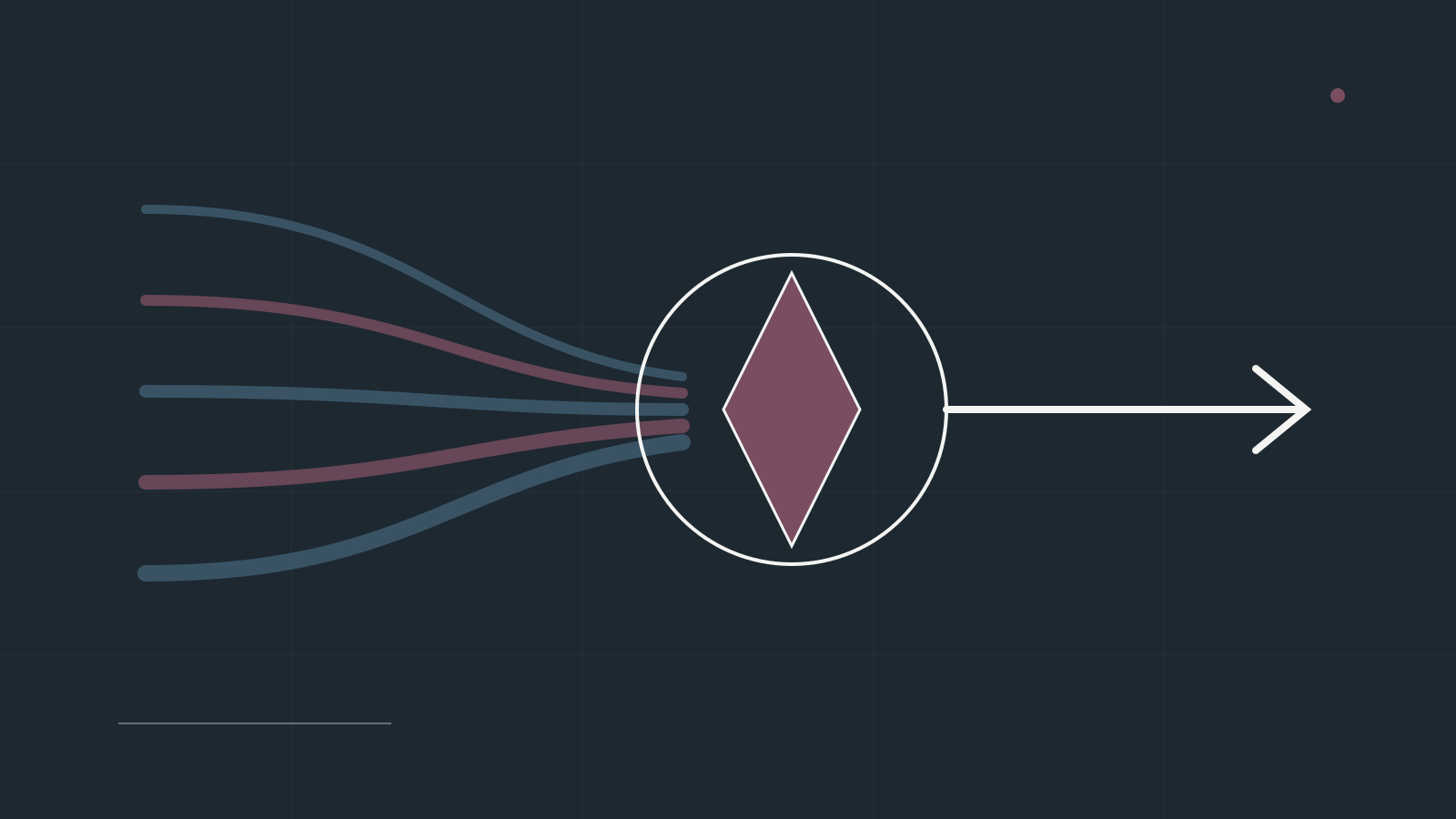
Decision → Data → Governance → Access → Activation
The technology matters, but it sits inside that system.
Why businesses need a data strategy
Most established organisations already have a lot of data.
The problem is usually that it is:
- spread across CRM, finance, marketing, operations and spreadsheets;
- defined differently by different teams;
- difficult to access without specialist help;
- unreliable enough that leaders do not trust it;
- collected without a clear use case;
- reported after the decision has already been made;
- governed in silos;
- disconnected from AI and automation ambitions.
The result is a familiar contradiction: a business can be “data rich” and still make important decisions with weak evidence.
OECD research has repeatedly highlighted the economic potential of data while also showing that effective use remains uneven across firms.
The strategic challenge is therefore not collecting more data for its own sake. It is increasing the organisation’s ability to use trusted data productively.
Start with decisions
The first question in a data strategy should be:
Which decisions need to become faster, more accurate or more repeatable?
Examples might include:
- Which customers are most likely to churn?
- Where is margin being lost?
- Which marketing activity creates qualified demand?
- Which products should be stocked in which locations?
- Which customer-service issues are increasing?
- Which sales opportunities need intervention?
- Which operational bottlenecks are affecting delivery?
Each decision creates a clearer requirement for data.
Without this step, organisations often build a sophisticated reporting layer that explains activity but changes very few decisions.
The Abrasim data strategy model
1. Decision
Define the business questions, decisions and outcomes the data must support.
For each priority decision, identify:
- owner;
- frequency;
- current information used;
- current delay;
- cost of a poor decision;
- desired outcome;
- measure of improvement.
This forces the strategy to stay commercially relevant.
2. Data
Determine which data is required and whether it is fit for purpose.
Review:
- source systems;
- definitions;
- completeness;
- accuracy;
- timeliness;
- granularity;
- ownership;
- historical availability;
- identifiers needed to join datasets.
Focus on data that is reliable enough for the decisions that matter most. Not every dataset needs the same level of improvement.
3. Governance
Governance defines how data can be trusted and used responsibly.
It includes:
- ownership;
- stewardship;
- quality standards;
- access rules;
- retention;
- privacy;
- security;
- change control;
- definitions;
- issue resolution.
OECD guidance frames data governance across the full data value cycle, from creation through use and deletion, balancing access and value with trust, privacy and other rights.
For a business, the practical question is simple: who is accountable when important data is wrong, unavailable or misused?
If the answer is nobody, the organisation does not yet have meaningful governance.
4. Access
Good data that nobody can use has limited value.
Access includes both technical and organisational availability.
Ask:
- Can analysts access trusted data without repeated manual extraction?
- Can managers obtain the measures they need at the right frequency?
- Can applications and AI systems access approved data through controlled interfaces?
- Are important definitions documented?
- Are access permissions proportional to risk?
- Can teams discover what data already exists?
Give people the access they need to do their work, while keeping appropriate controls in place.
5. Activation
The final layer is how data changes work.
Activation may take the form of:
- dashboards;
- alerts;
- forecasting;
- segmentation;
- operational rules;
- recommendations;
- automation;
- AI applications;
- experimentation;
- decision-support tools.
A data strategy that ends with a warehouse architecture has stopped too early.
The strategy should explain how data enters the operating system of the business.
Data strategy vs data architecture
These terms are often confused.
Data strategy
Defines why data matters, where it creates value, how it should be governed and what capabilities are needed.
Data architecture
Defines how data is technically structured, stored, moved and integrated.
Architecture is an important part of implementation, but it should follow strategic requirements.
Choosing a cloud data platform before clarifying the decisions and use cases can result in a technically elegant environment with weak adoption.
Data strategy vs analytics strategy
An analytics strategy focuses more narrowly on how data is analysed and used to generate insight.
A broader data strategy also addresses:
- collection;
- quality;
- integration;
- ownership;
- access;
- governance;
- lifecycle management;
- operational use.
The two should align.
How AI changes the data strategy conversation
AI has made data strategy more urgent because AI applications often expose weaknesses that dashboards tolerated.
A person can notice that a report contains an outdated field and compensate mentally.
An automated workflow may repeatedly act on that field.
AI readiness therefore requires clarity around:
- trusted sources;
- access boundaries;
- document quality;
- metadata;
- identity resolution;
- lineage;
- freshness;
- monitoring.
This does not mean every organisation needs a giant “AI data platform”.
It means data foundations should be designed with machine use as well as human reporting in mind.
What should a data strategy contain?
A practical strategy usually includes:
Business outcomes
Which priorities data is expected to improve.
Decision inventory
The high-value decisions and questions that require better information.
Current-state assessment
Major data sources, quality issues, ownership and capability gaps.
Target operating model
Who owns data, who stewards it, who can access it and how issues are resolved.
Architecture direction
The principles and technical capabilities needed to support the strategy.
Priority use cases
Where data can create measurable near-term value.
Governance model
Rules and responsibilities proportionate to risk.
Roadmap
A sequenced plan that combines quick wins with foundational work.
Measurement
How the organisation will know the strategy is creating value.
Common failure modes
Building the platform before the use case
A multi-year data-platform programme begins before leadership can explain which decisions it will improve.
Treating governance as paperwork
Definitions and ownership exist in a document but not in day-to-day operating processes.
Creating one giant dashboard
Every stakeholder request is added to one reporting layer until nobody knows which metrics actually matter.
Ignoring source-system quality
The warehouse faithfully centralises inconsistent data.
Centralised confusion is still confusion.
Measuring data activity instead of value
Teams report pipelines built, tables migrated and dashboards released instead of decisions improved, cycle time reduced or revenue influenced.
A practical starting point for a mid-sized organisation
You do not need to begin with an enterprise-wide data transformation.
Start with three to five high-value decisions.
For each one:
- Define the outcome.
- Map the current decision process.
- Identify the data required.
- Test quality and availability.
- Define ownership.
- Improve access.
- Build the minimum useful decision support.
- Measure whether the decision improves.
Patterns will emerge.
If several use cases fail because customer identifiers do not match across systems, identity resolution becomes a shared priority.
If every team defines revenue differently, metric governance becomes a shared priority.
Strategy grows from repeated evidence rather than an abstract wish list.
How do you know your data strategy is working?
Useful indicators include:
- less time spent finding and reconciling data;
- fewer disputes about metric definitions;
- reduced manual reporting effort;
- faster decision cycles;
- higher use of trusted data products;
- better experiment measurement;
- more reliable AI and automation inputs;
- measurable commercial or operational outcomes from priority use cases.
The ultimate measure is not how much data the company has centralised.
It is whether the organisation can make better decisions because of it.
What comes next?
If the organisation does not yet know how strong its foundations are, a data maturity assessment is a useful next step.
If the concern is specifically whether current analytics and tracking can be trusted, see What a Data & Measurement Audit includes.